




Vagus Nerve Stimulation
Vagus Nerve Stimulation: Mechanisms, Applications and Devices
Anatomy and Function of the Vagus Nerve
The vagus nerve is the major conduit of the parasympathetic nervous system. It is a paired, mixed (sensory and motor) nerve that exits the medulla oblongata, passes down the neck within the carotid sheath and projects to the heart, lungs and digestive tract. Vagal fibres connect the brainstem with visceral organs and mediate cardiovascular, respiratory and gastrointestinal homeostasis.
Implanted Vagus Nerve Stimulation: Device, Procedure and Efficacy
Implanted vagus nerve stimulation (VNS) uses a pacemaker-like pulse generator placed under the skin of the chest and a thin lead that is tunnelled up the neck and wrapped around the left vagus nerve. The left nerve is used because stimulating the right vagus nerve can affect the heart more strongly (Northwell Health). The pulse generator delivers brief electrical pulses (typically 30 seconds on, every five minutes) to the nerve. Stimulation intensity and frequency are adjusted in clinic, and patients can trigger extra pulses using a handheld magnet when a seizure begins.
Battery life is usually 5–10 years, after which a minor operation replaces the generator. Modern systems include AutoStim functions that deliver extra pulses automatically when a sudden heart-rate increase suggests an impending seizure (Barrow Neurological Institute).
Surgical Implantation Procedure
Implantation takes around 45–90 minutes under general anaesthesia and involves two small incisions:
• Chest incision: A 2.5–3 cm cut below the left collarbone creates a pocket for the pulse generator.
• Neck incision: Another 2–3 cm incision is made on the left lower neck to expose the vagus nerve within the carotid sheath. The surgeon wraps the electrode lead around the nerve, tunnels it beneath the skin to the chest, and connects it to the generator.
The device is tested during surgery and permanently activated after healing, usually two to four weeks later. Most patients go home the same day and return to normal activity within a week (Penn Medicine). Common short-term effects include hoarseness, throat discomfort, coughing, and mild shortness of breath during stimulation; these usually lessen as settings are adjusted (Mayo Clinic).
Efficacy and Clinical Use
Drug-resistant epilepsy
VNS therapy is approved for epilepsy not controlled by medication. It does not cure epilepsy but can reduce seizure frequency and intensity. About half of patients achieve at least a 50% reduction in seizures within one to two years, and many report improved mood and cognition (Northwell Health). A cohort study from 2023 found that 35.8% of patients responded overall. Of those, 86% had generalised epilepsy and 29% had focal epilepsy (PMC 12494630).
Treatment-resistant depression
Approved in 2005 as adjunctive therapy, VNS for major depressive disorders provides gradual, sustained benefits. Approximately 30–40% of patients show significant symptom reduction within a year, and 20–25% experience long-term remission. The 2024 RECOVER trial showed participants with active stimulation had better quality of life and mood improvements over 12 months than those with inactive devices, with gains most apparent in the final quarter of follow-up (Washington University School of Medicine).
Post-stroke rehabilitation
Paired VNS, in which stimulation is synchronised with rehabilitation exercises, is FDA-approved for upper-limb recovery after ischaemic stroke. Trials show 47% of patients receiving VNS with physiotherapy achieved meaningful improvement in arm and hand function, about double the rate of therapy alone (Cleveland Clinic).
Other research areas
Investigations are ongoing into implanted VNS for autoimmune disorders, chronic inflammation, migraine, obesity, anxiety and post-viral syndromes such as long COVID. Evidence remains preliminary and insufficient for routine clinical use.
Safety and Side Effects
VNS implantation is generally safe. Short-term side effects include mild pain, hoarseness, cough, or changes in swallowing. Rare surgical complications include infection, lead fracture, or transient vocal cord weakness. The procedure is reversible, and the device can be turned off or removed if required. Serious cardiac effects are rare because the left vagus nerve is used (Mayo Clinic).
Mechanisms of Vagus Nerve Stimulation
Vagus nerve stimulation (VNS) activates afferent fibres projecting to the nucleus tractus solitarius (NTS) in the brainstem, influencing autonomic tone and neuroinflammatory pathways. Electrical stimulation induces release of acetylcholine at peripheral targets, suppressing cytokine production via the so-called cholinergic anti-inflammatory pathway (Tracey 2002). In humans, both implanted and transcutaneous devices are used to achieve this effect, typically at low current (0.25–3.0 mA) and low frequency (20–30 Hz) parameters.
Clinical and Experimental Applications
Implanted VNS was first approved in the late 1990s for drug-resistant epilepsy and later for treatment-resistant depression. The therapy involves a pulse generator implanted beneath the clavicle, with a lead wrapped around the left vagus nerve in the neck. It delivers intermittent electrical impulses to modulate cortical excitability and limbic activity (LivaNova 2025).
Recent clinical investigations have expanded to inflammatory and autoimmune conditions, such as rheumatoid arthritis, Crohn’s disease, and inflammatory bowel disease. In 2025, SetPoint Medical received regulatory clearance for advanced clinical use of bioelectronic vagus nerve stimulation in rheumatoid arthritis, marking the first implant specifically indicated for immunomodulation.
Non-invasive transcutaneous vagus nerve stimulation (tVNS) is under active research for disorders including migraine, cluster headache, depression, fibromyalgia, long COVID, and post-traumatic stress. Research indicates limited advantages regarding pain, fatigue, and emotional regulation via the modulation of heart-rate variability and inflammatory cytokines (van Leusden et al., 2024; Zhao et al., 2024).
Safety and Side Effects
Implanted systems may cause transient hoarseness, cough, dysphonia, throat discomfort, or dyspnoea. More serious complications, although uncommon, include vocal-cord paresis, infection, lead malfunction and cardiac bradyarrhythmia (Mayo Clinic). Transcutaneous devices generally produce only minor local reactions, such as tingling, redness, or mild ear pain. Meta-analyses indicate that adverse effects are typically comparable to sham stimulation (Frontiers in Physiology, 2025).
Commercial and Consumer Devices
I highly recommend joining this Facebook group to learn more about the user experience of any of the products listed below. The Association does not endorse or recommend any of the products listed here.

- gammaCore Sapphire – A handheld cervical stimulator approved in the UK for migraines and cluster headaches. Prescription only; safety notices warn against use with implanted metal devices or pacemakers. Common side effects include mild neck pain and transient tingling.
- NEMOS tVNS (Cerbomed) – An auricular stimulator using a pre-gelled ear electrode; it is CE-marked for treating epilepsy and depression in Europe. A minority of users report experiencing temporary skin irritation as a side effect.
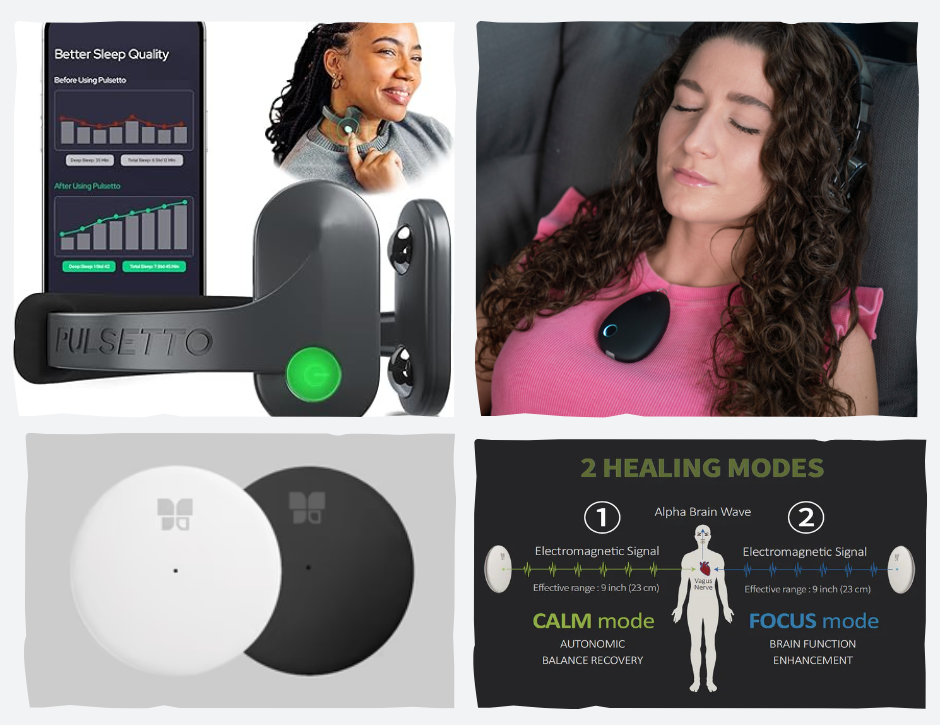
- Truvaga Plus – A consumer wellness device marketed for stress reduction and improved sleep. No clinical endorsement; evidence limited to manufacturer-funded trials.
- Neuvana Xen – Delivers auricular stimulation via earbud electrodes paired with a smartphone app. Independent testing remains scarce; it is marketed as a relaxation aid rather than a medical treatment.
- Pulsetto Fit – A wearable neck device using low-frequency pulses; designed for stress and sleep improvement. Evidence for efficacy beyond placebo remains limited.
- VeRelief Prime – Portable stimulator for short sessions of stress relief. The manufacturer cautions against use in individuals with neurological implants or cardiac conditions.
While these products are widely promoted online, few have undergone independent peer-reviewed clinical evaluation. Users should exercise caution and consult medical professionals before use, particularly those with heart disease, implanted medical devices or epilepsy.
None of the consumer devices listed above constitutes a substitute for medical vagus nerve stimulation, and none is indicated for the treatment of epilepsy, major depressive disorder, or autoimmune disease outside regulated clinical protocols.
Research and Future Directions
Emerging trials are investigating VNS for autoimmune and inflammatory diseases, mood disorders, chronic pain and metabolic regulation. Mechanistic work highlights vagal modulation of the hypothalamic–pituitary–adrenal axis and the “inflammatory reflex” that regulates systemic cytokine activity. Ongoing studies at academic centres, including the Feinstein Institutes and AAMC, suggest bioelectronic medicine may eventually complement pharmacotherapy for conditions such as rheumatoid arthritis and long-term COVID.
Neurobollocks
A sceptic's take on the commercialisation of the vagus nerve
The following article offers a strongly critical, sceptical perspective on the popularisation and therapeutic use of Polyvagal Theory: useful for reflecting on how clinical frameworks may be co-opted or overstated beyond what evidence supports.
https://www.neuroscienceandpsychotherapy.com/post/polyvagal-neurobollocks
Recommended Books
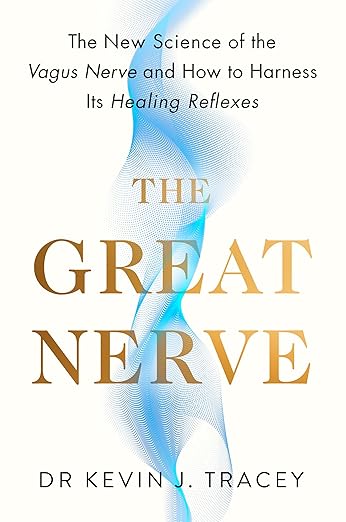
- Tracey, K. J. (2025). The Great Nerve: The New Science of the Vagus Nerve and How to Harness Its Healing Reflexes. Crown. A leading researcher’s first-hand account of the discovery of the inflammatory reflex and how vagus-nerve stimulation (VNS) has been translated into clinical and therapeutic practice.
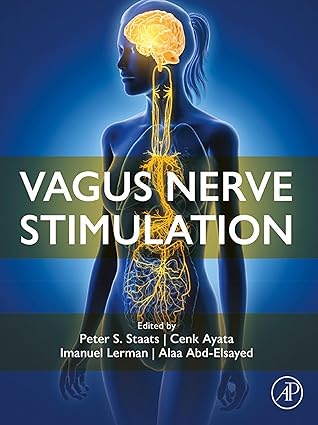
- Staats, P. S., et al. (2022). Vagus Nerve Stimulation. Elsevier.
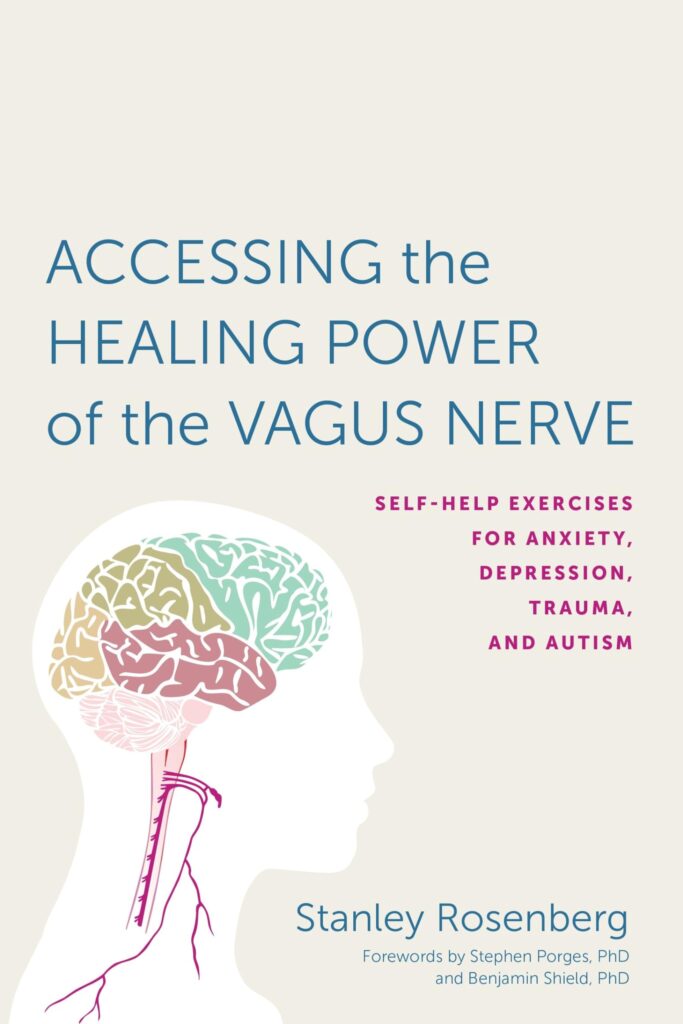
The definitive medical reference on VNS, covering both implanted and transcutaneous systems — including stimulation parameters, programming protocols, clinical indications, outcomes, and safety considerations. - Rosenberg, S. (2017). Accessing the Healing Power of the Vagus Nerve. North Atlantic Books.
A practitioner-oriented guide integrating body-work (craniosacral therapy, breathwork, and postural awareness) and concepts from autonomic neuroscience — useful for therapists and clients interested in self-regulation, emotional balance, and embodied healing.
References
Mayo Clinic. (2025). Vagus nerve stimulation (VNS): indications, procedure, and risks. Mayo Clinic Proceedings.
Cleveland Clinic. (2025). Vagus nerve stimulation therapy (VNS): Uses, benefits, and side effects. Cleveland Clinic Health Library.
LivaNova. (2025). Vagus nerve stimulation therapy: Clinical overview and device applications. LivaNova Medical Technologies.
van Leusden, J. W. R., et al. (2024). Paired vagus nerve stimulation for post-stroke upper-limb rehabilitation: Clinical outcomes and mechanisms. Frontiers in Neuroscience.
Zhao, Y., et al. (2024). Transcutaneous vagus nerve stimulation and autonomic regulation: A systematic review. Frontiers in Physiology.
Frontiers in Physiology. (2025). Recent advances in vagus nerve stimulation and autonomic modulation. Frontiers Media SA.
Association of American Medical Colleges (AAMC). (2024). Bioelectronic medicine and neuromodulation: Clinical education update. AAMC Publications.
Northwell Health. (2025). Vagus nerve stimulation for neurological and psychiatric disorders. Northwell Health Education Series.
Tracey, K. J. (2025). The great nerve: The new science of the vagus nerve and how to harness its healing reflexes. Crown.